Width + swing
Account for the actual equipment or vehicle width, approach angle, hinges, latch clearance, snow, landscaping, and the direction the gate can safely open.
 FrontierFence, LLC
Design the access with the fence
A gate is the most active part of a fence. Width, swing, slope, frame strength, posts, clearances, latch position, vehicle movement, and future equipment access should be decided with the fence—not after it.
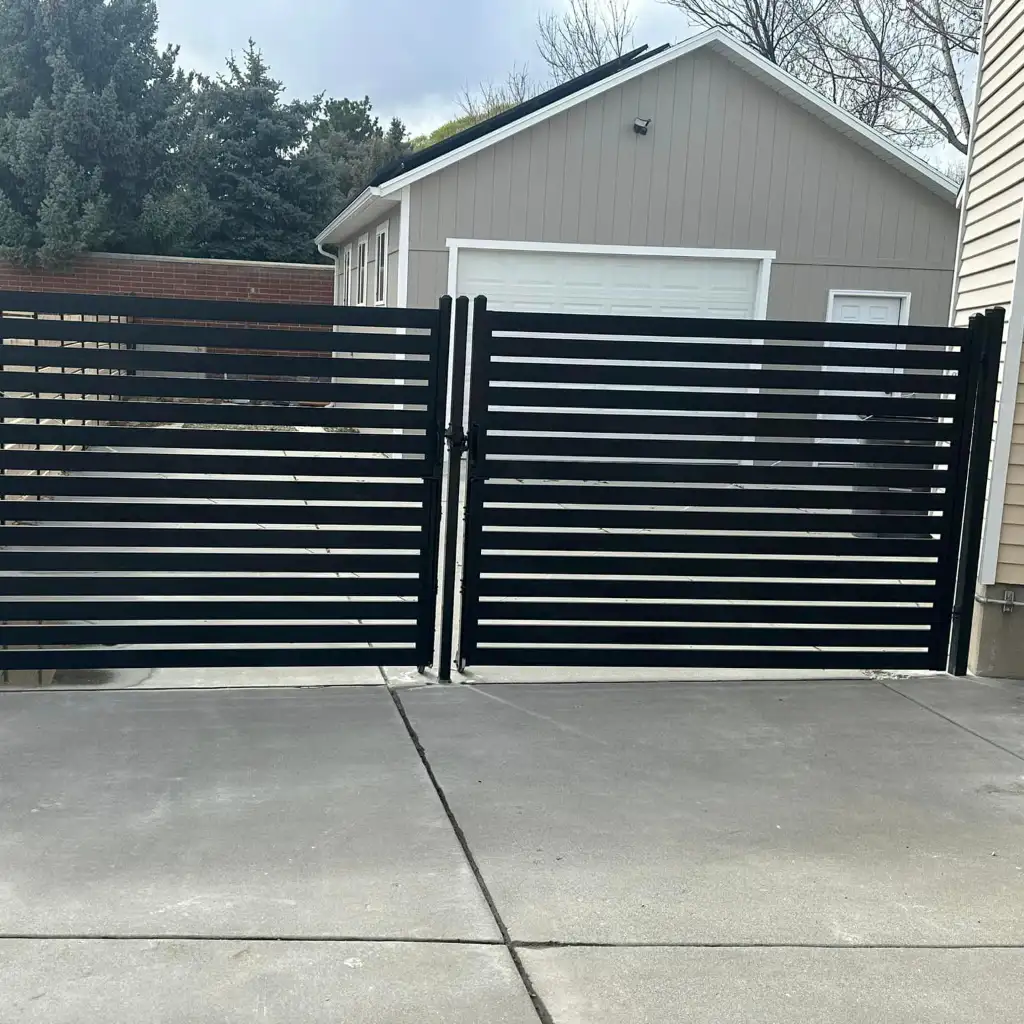
Measure the traffic
Start with what must pass through the opening and how often. A comfortable pedestrian gate, a lawn-equipment opening, a trailer gate, and a commercial drive gate need different clearances and support.
Account for the actual equipment or vehicle width, approach angle, hinges, latch clearance, snow, landscaping, and the direction the gate can safely open.
Gate weight and daily use determine the frame, posts, hinges, latches, stops, drop rods, and reinforcement needed to keep the opening aligned.
Grades, driveway pitch, overhead room, power, safety devices, delivery access, and emergency use should be resolved before choosing a swing, slide, or automated system.
Think beyond today
Future landscaping, sheds, trailers, recreational equipment, maintenance access, and changes in vehicle size are easier to plan for before the fence is installed than after the gate opening is fixed.
Start with a clear estimate
Tell Frontier what the property needs, the materials you are considering, and any access, grade, irrigation, or gate details you already know.